


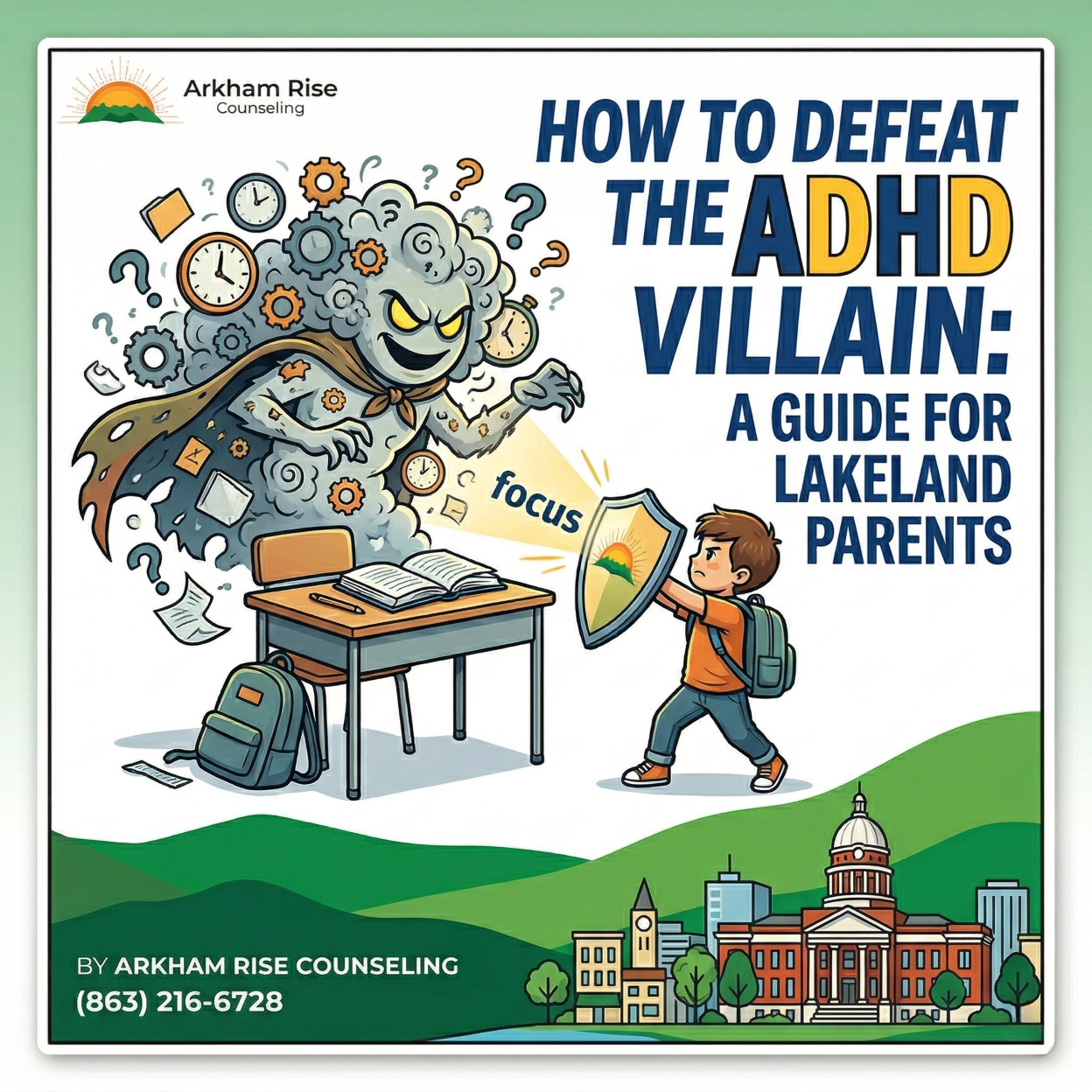
In the comic books, every hero has a nemesis that tests their focus, impulse control, and emotional resilience. For many families in Lakeland, that nemesis is the ADHD Villain.
Whether it’s the "Executive Dysfunction Fog" or the "Hyperactivity Whirlwind," ADHD can make your child feel like they are losing the battle before the school day even begins. But at ArkhamRise, we believe that with the right "Signature Moves," every child can turn their neurodivergence into a superpower.
Understanding the Villain: What the Science Says
ADHD (Attention-Deficit/Hyperactivity Disorder) isn't a lack of willpower; it is a complex neurological condition. Clinical research shows that the ADHD brain often has lower levels of dopamine and norepinephrine in the prefrontal cortex—the area responsible for:
- Working Memory: Holding information long enough to use it.
- Inhibition Control: Pausing before acting.
- Emotional Regulation: Managing "big feelings" when things go wrong.
The Toolkit: ADHD Medications Explained
Sometimes, a hero needs the right "utility belt" to level the playing field. Here is how the most common ADHD medications work in plain English:
- The "Power Boosters" (Stimulants like Adderall or Vyvanse): These work for about 70–80% of kids. They "turn up the brightness" on dopamine, helping the brain’s signals travel clearly so your child can stay in their lane. These are fast-acting, usually working within 60 minutes.
- The "Steady Shields" (Non-Stimulants like Strattera or Qelbree): These work like a slow-release battery. They build up over 2–4 weeks to provide a steady shield of focus and emotional control without the "kick" or "crash" sometimes associated with stimulants.
- The "Calming Capes" (Alpha-Agonists like Intuniv or Kapvay): Originally for blood pressure, these "turn down the noise" in the brain. They calm the part of the brain that triggers "fight or flight," making it easier for a child to pause before they react physically.
- Coming Soon in 2026: New "Triple-Threat" medications (NDSRIs like Centanafadine) are currently under FDA review. These aim to balance dopamine, norepinephrine, and serotonin all at once for broad symptom management.
Battle Strategy: 3 Steps to Victory
- Establish the "Home Base" Routine: The ADHD villain thrives on chaos. Use visual timelines and a designated "launchpad" for school gear.
- Master the "Dopamine Menu": Provide healthy "power-ups" like high-intensity movement (a bike ride around Lake Hollingsworth) to naturally boost brain chemicals.
- Assemble Your League of Heroes: Don't fight alone. Work with the Polk County School District on an IEP and partner with a local clinic that offers collaborative care.
Your Lead Strategist: Meet Molly Fragiacomo
Every hero needs a mentor. At ArkhamRise, our ADHD medical care is led by Molly Fragiacomo, MS, PA-C.
Molly is a Board-Certified Physician Assistant who specializes in child and adolescent psychiatry. She doesn’t just prescribe; she partners with families to find the exact "utility belt" that works for your child’s unique biology. Her approach is grounded in the latest clinical standards, ensuring your child receives modern, compassionate care right here in Lakeland.
Assemble Your League: Therapy & Support
Medication provides the capacity to learn, but therapy provides the skills to succeed. Our team of trained counselors in Lakeland currently has open availability to help your child master executive functioning, social cues, and emotional regulation.
- Meet the Rest of the Team: See Our Counselors & Current Availability
Parent’s ADHD Medication Checklist
Phase 1: Before the Appointment
- Gather Intel: Ask your child’s teacher—are they struggling more with "sitting still" or "finishing work"?
- Track the "Villain": Note what time of day your child struggles most (e.g., the 2 PM school slump).
- Check the Vitals: Record your child’s current weight and typical sleep patterns.
Phase 2: Questions for Molly or Your Provider
- The "Why": Why is this specific medication the best starting point for my child?
- The "When": How long until we see a "level up" in focus?
- Side Effect Defense: What are the "red flags," and how do we manage appetite loss?
Phase 3: The Collaborative Plan
- Therapy Tie-In: How will this work with our counseling sessions?
- The Follow-Up: When is our next "Battle Briefing" to adjust the dosage?
Download our parent checklist here!
Victory is a Team Sport
At the end of the day, remember that ADHD doesn’t define your child—it’s just the "villain" they are currently learning to outsmart. Whether you are navigating a new diagnosis or looking for a more integrated approach to care, you don’t have to do it alone.
From the clinical precision of medication management with Molly Fragiacomo to the skill-building power of our counseling team, Arkham Rise Counseling is here to help your family level up.
Your child’s hero story is just beginning. Let’s make sure they have the best league behind them.
Ready for Your First Battle Briefing?
Don't wait for another rough school week. Take the first step toward a calmer, more focused home today.