


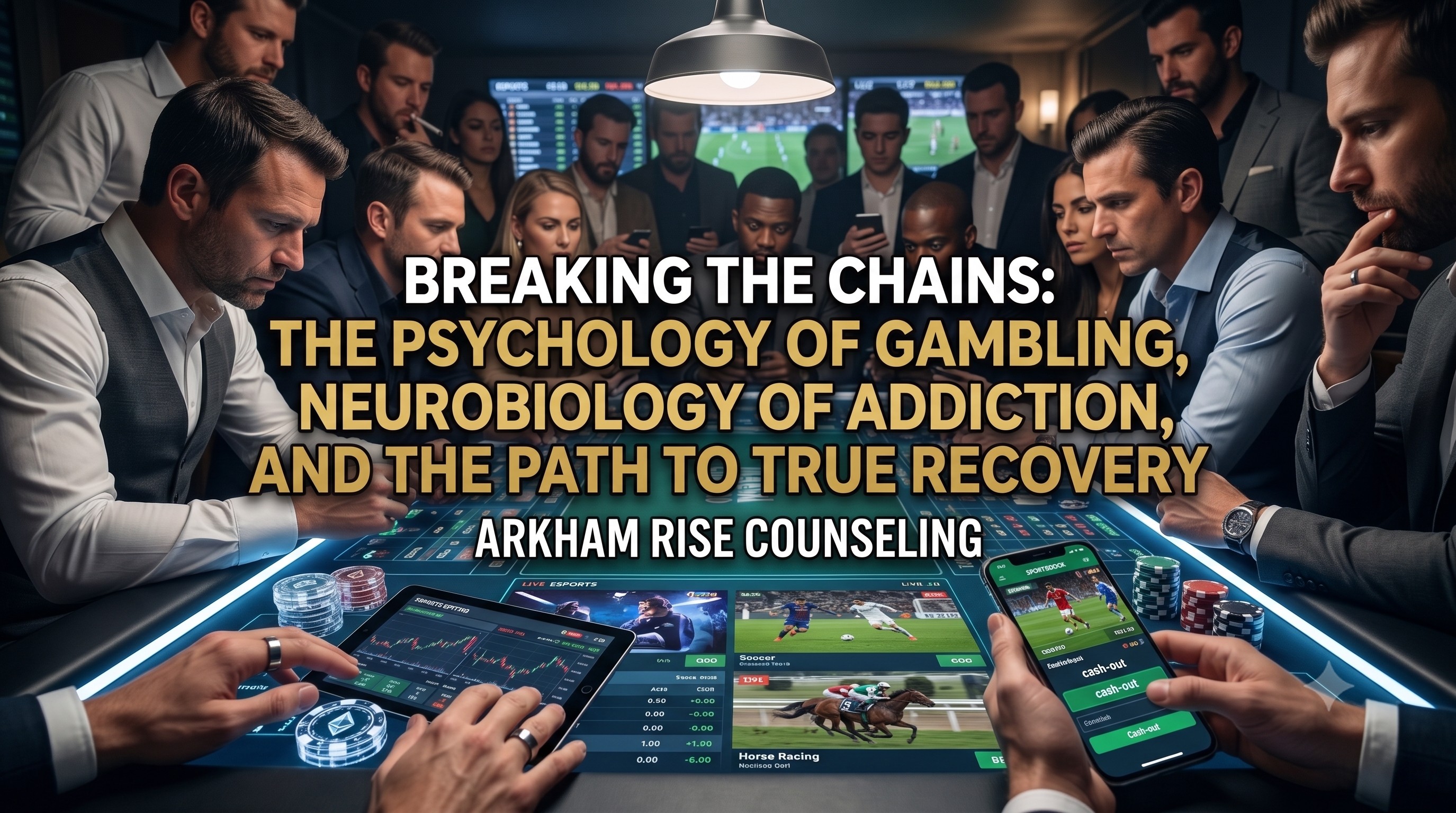
In the quiet, modern landscape of digital connectivity, a silent crisis is sweeping through living rooms, workplaces, and communities across Florida and the nation. It does not look like the addictions of the past. There are no chemical substances to measure, no physical track marks to identify, and no breathalyzer tests to administer. Yet, its destructive power over the human brain, family structures, and financial stability is identical to—and in some ways, more insidious than—substance abuse.
This crisis is the rapid, unprecedented rise of Problem Gambling and Process Addictions.
For decades, behavioral compulsions were viewed by society as moral failings, weaknesses of character, or expensive hobbies gone wrong. Today, clinical neuroscience reveals a much more profound reality: gambling addiction rewires the brain’s neural circuitry in the exact same ways as cocaine, alcohol, or opioids. As sports betting apps turn every smartphone into a 24/7 virtual casino and digital gaming models blur the lines between recreation and compulsion, the need for specialized, evidence-based intervention has never been more urgent.
At Arkham Rise Counseling in Lakeland, Florida, we recognize that overcoming an addiction requires more than just willpower—it requires specialized expertise. We are pleased to share that Kyle Lidge, LMHC, a veteran psychotherapist with over 15 years of experience, has completed advanced clinical training through the International Gambling Counselor Certification Board (IGCCB) to become an International Certified Gambling Counselor (ICGC). This specialized credential addresses a major gap in community care, equipping Kyle and Arkham Rise to provide targeted behavioral recovery strategies in Central Florida and statewide via telehealth.
1. The Neurobiology of the "Hidden Addiction"
To understand why gambling is so incredibly difficult to stop, one must look beneath the surface and examine the neurobiology of the human brain. Problem gambling—clinically termed Gambling Disorder in the Diagnostic and Statistical Manual of Mental Disorders (DSM-5)—is classified alongside substance use disorders for a crucial reason: it hijacks the brain's reward system.
The Dopamine Engine and Intermittent Reinforcement
The human brain is naturally wired to seek rewards. When we engage in life-sustaining activities—like eating an excellent meal or exercising—our brain releases a surge of dopamine, the neurotransmitter responsible for pleasure, motivation, and reinforcement. This chemical signal tells the brain, "This feels good; remember what caused this and do it again."
In a healthy brain, rewards are predictable or tied to tangible effort. However, gambling introduces a psychological phenomenon known as intermittent reinforcement. In behavioral psychology, an intermittent schedule of reinforcement means that rewards are delivered unpredictably. You do not win every time you place a bet; in fact, you lose most of the time.
Crucially, neuroscience has discovered that dopamine spikes higher during the anticipation of a reward than during the reward itself. When a roulette wheel spins, a slot machine rolls, or a football game enters the final two minutes, the brain is flooded with dopamine. The uncertainty creates an intense chemical rush. For an individual predisposed to gambling addiction, this thrill becomes an intoxicating escape. Over time, the brain becomes desensitized. Normal life activities—like spending time with family, pursuing hobbies, or advancing in a career—no longer produce enough dopamine to register as pleasurable. The individual becomes chemically numb to everything except the high of the next wager.
Shifting the Brain's Anatomy
Prolonged compulsive gambling actively alters key anatomical structures within the brain:
- The Nucleus Accumbens (The Reward Center): This region becomes blunted over time. Higher risks, larger bets, and longer gambling sessions are required to achieve the same emotional high—a phenomenon known as tolerance.
- The Prefrontal Cortex (The Executive Control Center): Responsible for logical reasoning, impulse control, risk assessment, and long-term planning, the prefrontal cortex becomes impaired by chronic compulsive behavior. When an individual is in the grip of an addictive cycle, this "braking system" of the brain goes offline, rendering them temporarily incapable of accurately evaluating the devastating consequences of their financial decisions.
2. The Evolution of Gambling in the Digital Age
The landscape of gambling has fundamentally shifted over the last decade. Historically, engaging in gambling required physical effort: driving to a casino, visiting a racetrack, or meeting a local bookie. These geographical and social boundaries provided built-in "friction," allowing individuals time to pause, reflect, and potentially interrupt their impulses.
Today, those boundaries have completely dissolved.
The Rise of Mobile Sports Betting and Micro-Wagering
With the legalization and rapid expansion of mobile sports betting apps across the United States, including Florida, a casino now lives permanently in the pockets of millions. Individuals no longer just wager on the final outcome of a baseball or football game. Mobile platforms utilize micro-wagering, allowing users to bet on individual plays, the outcome of the very next pitch, or whether a player will make a single free throw.
This hyper-accelerated pace compresses the time between the wager, the result, and the next bet into mere seconds. The rapid-fire loop mimics the mechanics of traditional slot machines, maximizing dopamine production and vastly accelerating the speed at which an individual can develop a severe behavioral addiction.
The Gamification of Tech and the "Loot Box" Crisis
The convergence of video gaming and gambling has introduced a new generation to these destructive neural pathways. Modern video games frequently incorporate loot boxes—virtual items containing randomized rewards that players purchase with real money or in-game currency. Because the contents of a loot box are hidden until purchased, opening one relies on the exact same psychological mechanism as pulling the lever on a slot machine. Young adults and teenagers are effectively being conditioned to experience the dopamine surges of gambling long before they are legally allowed to enter a casino.
3. Recognizing the Signs: Symptoms of Gambling Disorder
Because problem gambling does not manifest in slurred speech, bloodshot eyes, or physical coordination changes, it is often referred to as the "hidden addiction." Individuals struggling with a gambling problem frequently maintain a facade of high functioning, appearing successful, motivated, and fully present, even as their financial and emotional foundations disintegrate behind closed doors.
Understanding the clinical signs of a gambling problem can save a career, a marriage, or a life. According to the DSM-5, an individual may be dealing with a gambling disorder if they exhibit four or more of the following signs over a 12-month period:
- Tolerance in Wagering: Needing to gamble with increasing amounts of money in order to achieve the desired excitement or emotional rush.
- Restlessness and Irritability: Experiencing physical or psychological distress, anxiety, or anger when attempting to cut down or stop gambling completely.
- Unsuccessful Attempts to Control: Repeated, failed efforts to control, cut back, or halt gambling behaviors permanently.
- Preoccupation: Being completely consumed by thoughts of gambling—such as constantly reliving past gambling experiences, planning the next venture, or scheming ways to acquire money to bet.
- Gambling as an Escape: Turning to wagering as a primary coping mechanism when feeling distressed, anxious, depressed, helpless, or guilty.
- "Chasing" Losses: After losing money gambling, frequently returning another day in an urgent attempt to break even or win back what was lost.
- Lying and Concealment: Lying to family members, close friends, employers, or therapists to conceal the true extent of involvement with gambling or the financial damages incurred.
- Jeopardizing Key Relationships: Endangering or losing a significant relationship, job, educational path, or career advancement opportunity due to gambling.
- Financial Reliance on Others: Relying on family, friends, or third parties to provide money to relieve desperate financial situations caused by gambling losses.
4. The Dangerous Intersections: Gambling, Trauma, and Co-Occurring Addictions
In clinical practice, gambling addiction rarely occurs in a vacuum. It is deeply intertwined with broader mental health struggles, often acting as a symptom of unaddressed internal pain.
The Role of Co-Occurring Disorders (Dual Diagnosis)
A vast majority of individuals who present for gambling addiction treatment also meet the diagnostic criteria for at least one other mental health condition. The most common co-occurring disorders include:
- Depression and Chronic Anxiety: For many, the high-intensity focus required by gambling acts as an emotional anesthetic. While staring at a screen or calculating odds, the distressing thoughts of depression or the ambient buzz of anxiety are temporarily silenced.
- Substance Use Disorders (SUD): Substance abuse and gambling frequently fuel one another. Alcohol and drugs lower inhibitions and impair impulse control, making an individual far more likely to take catastrophic risks or chase financial losses at the card table or on an app.
- High Risk of Suicidality: Clinicians recognize problem gambling as having one of the highest rates of suicidal ideation and suicide attempts among all psychiatric disorders. The combination of devastating financial ruin, deep shame, relational wreckage, and intense feelings of entrapment can leave individuals feeling as though they have no other escape. This makes immediate, professional, and specialized intervention a literal matter of life and death.
The Trauma Connection: Overfunctioning and the Burden of Hyper-Independence
At Arkham Rise Counseling, our clinical team specializes in understanding the root emotional causes of unhealthy coping mechanisms. We frequently observe gambling addiction manifest in individuals who have spent their lives in the role of the "overfunctioning" or "hyper-independent" pillar within their families or social circles.
Rooted in Bowen Family Systems Theory, overfunctioning occurs when an individual habitually takes on excess psychological or emotional responsibility for others, especially during times of prolonged stress or childhood instability. Growing up in environments shaped by parental emotional unavailability, illness, or conflict, these individuals adapt through parentification—learning early that their safety and belonging are conditional upon their competence, emotional containment, and ability to take care of everyone else.
This survival mechanism, closely linked to the "fawn" trauma response, teaches individuals to completely suppress their own internal vulnerabilities. However, carrying that unrelenting weight takes a heavy psychological toll. When authentic vulnerability feels unsafe and there is no healthy outlet to process systemic stress, the individual may turn to gambling as a private, insulated world where they do not have to manage anyone else. What appears to the world as an elite, high-functioning personality can often mask an invisible pressure-release valve for years of accumulated emotional strain and unhealed relational trauma.
5. Meet Kyle Lidge, LMHC, ICGC: Certified Care for Complex Addictions
Because behavioral addictions operate on unique psychological loops, standard, generalized talk therapy is often insufficient to break the cycle. True recovery requires an expert who understands the specific nuances of gambling contracts, financial recovery structures, cognitive distortions surrounding probability, and the intense shame unique to this disorder.
Comprehensive Clinical Expertise
Kyle Lidge, LMHC, is a Licensed Mental Health Counselor in the State of Florida (License: MH11209) with over 15 years of clinical practice. Holding a Master’s degree in Community Mental Health Counseling from Springfield College (Graduated 2008), Kyle has dedicated his career to helping adolescents and adults navigate their most complex emotional battles, including anxiety, severe depression, trauma recovery, and substance use challenges.
To address the growing crisis of problem gambling in Florida, Kyle completed the rigorous training and supervision required to earn the designation of International Certified Gambling Counselor (ICGC) through the International Gambling Counselor Certification Board. This advanced specialization means Kyle is equipped with evidence-based protocols specifically designed to target the cognitive loops, physiological impulses, and relational patterns of gambling addiction.
Kyle’s Core Therapeutic Modalities
Kyle prides himself on creating a grounded, solution-focused, and judgment-free therapeutic alliance. He blends several evidence-based modalities to build a personalized roadmap for every client:
- Cognitive Behavioral Therapy (CBT): Problem gambling is driven by deeply ingrained cognitive distortions, such as the "gambler’s fallacy" (the belief that a win is "due" because of a string of past losses) or illusions of control over randomized outcomes. Kyle partners with clients to identify these automatic, distorted thought patterns, deconstruct them, and consciously shift the behaviors that keep them stuck.
- Trauma-Focused CBT (TF-CBT): For clients whose addictions are rooted in past emotional distress or childhood trauma, Kyle utilizes trauma-focused tools to safely explore the underlying pain driving their compulsive behaviors. By healing the original wound, the urge to use gambling as an emotional escape naturally loses its power.
- Motivational Interviewing (MI): Change is rarely linear, and ambivalence about giving up an addiction is entirely normal. Through Motivational Interviewing, Kyle meets clients exactly where they are, helping them cultivate internal motivation, clarify their personal values, and build the confidence necessary to pursue long-term sobriety.
6. The Arkham Rise Roadmap to Recovery
Recovery from gambling and behavioral addiction is a holistic process. At Arkham Rise Counseling, our treatment plans address every facet of an individual’s life—neurological, psychological, financial, and relational.
When you choose to work with Kyle Lidge and the Arkham Rise team, your recovery journey encompasses a multi-layered framework built directly upon the standardized training protocols established by the IGCCB:
Phase 1: Creating Safety and Interrupting the Cycle
The immediate priority in gambling recovery is establishing structural safety to protect the client from further financial and emotional harm. This includes:
- Implementing External Barriers: Utilizing specialized software (such as Gamban or BetBlocker) to block gambling websites and apps across all digital devices.
- Voluntary Self-Exclusion: Assisting the client through the process of registering for state-run self-exclusion programs, legally banning themselves from entering physical casinos or operating legal state betting accounts.
- Financial Restructuring: Working collaboratively with spouses or trusted family members to temporarily transfer financial management and oversight, removing the immediate access to cash that functions as the primary vehicle for impulsive wagers.
Phase 2: Cognitive Deconstruction and Rewiring
Once immediate safety is established, therapy transitions into dismantling the psychological engine of the addiction:
- Deconstructing Distortions: Systematically identifying and neutralizing the irrational beliefs surrounding probability, luck, and financial recovery through gambling.
- Urge Surfing and Regulation: Teaching clients actionable mindfulness and nervous system regulation techniques to tolerate and "surf" intense waves of cravings without acting on them.
- Replacing the High: Identifying healthy, low-stakes activities that can naturally stimulate dopamine production and fulfill the client's need for challenge, excitement, or relaxation.
Phase 3: Integrated Care and Long-Term Healing
At Arkham Rise Counseling, we believe in supporting the mind, body, and spirit. True resilience is built when your entire care team works in perfect harmony.
- Collaborative Psychiatry and Medication Management: For many individuals, breaking an intense behavioral addiction is significantly enhanced by psychiatric support. Arkham Rise features integrated clinical services, allowing Kyle to collaborate directly with psychiatric providers. If a client is battling severe co-occurring anxiety, ADHD, or depression, targeted medication management can stabilize the nervous system, reduce impulsive urges, and give the client the emotional bandwidth needed to fully engage in therapy.
- Rebuilding Relationships: Addiction damages trust. Through individual counseling and structured family strategies, Kyle helps clients navigate the delicate process of repair, helping them learn how to communicate honestly, set clear boundaries, and rebuild intimacy with the people who matter most.
7. Overcoming the Barrier of Shame: No Insurance, No Judgment, Just Growth
The single greatest obstacle preventing individuals from seeking help for gambling and addiction is deep, paralyzing shame. The fear of being judged by a therapist, exposed to an employer, or misunderstood by loved ones keeps thousands of people trapped in isolation.
Arkham Rise Counseling was built to dismantle that barrier. Our foundational mission is to provide ethical, responsible, and deeply compassionate mental health services that treat every client like the hero of their own recovery journey.
Flexible Options Built Around Your Life
We believe that accessing premier mental health care should be straightforward, transparent, and private. To meet the diverse needs of our Central Florida community and clients statewide, we offer highly adaptable treatment structures:
- In-Person Therapy in Lakeland: For clients who prefer the face-to-face connection and grounded energy of an office setting, Kyle accommodates appointments at our comfortable, welcoming location in downtown Lakeland, Florida.
- Secure Statewide Telehealth: If you reside in Miami, Tampa, Orlando, Jacksonville, Tallahassee, or any area across Florida, you can access Kyle’s specialized ICGC care from the absolute privacy and comfort of your home. We utilize fully secure, HIPAA-compliant telehealth platforms to ensure your absolute confidentiality.
- Arkham Care Packs: To circumvent the stress, paperwork, and limitations often imposed by insurance companies, Arkham Rise offers Care Packs. These are prepaid digital credits for counseling services that can be redeemed for individual therapy sessions—virtual or in-person—with no insurance approvals, no diagnoses sent to a third party, and no waitlists.
- Arkham@Work: A specialized corporate mental health program providing confidential, immediate, subscription-based support for organizations looking to safeguard the well-being of their workforce.
8. Take Your First Step Toward Freedom Today
An addiction thrives in darkness, secrecy, and isolation. The moment you choose to speak about it to a specialized professional, its power begins to dissolve.
You do not have to carry the overwhelming weight of financial stress, hidden secrets, and unmanageable impulses alone. Whether you are struggling with sports betting, casino gambling, digital process addictions, or the unhealed trauma driving these behaviors, a life of peace, financial clarity, and emotional freedom is entirely possible.
Let us start working toward your personal goals today. Reach out to connect with Kyle Lidge, LMHC, ICGC, and the dedicated clinical team at Arkham Rise Counseling.