


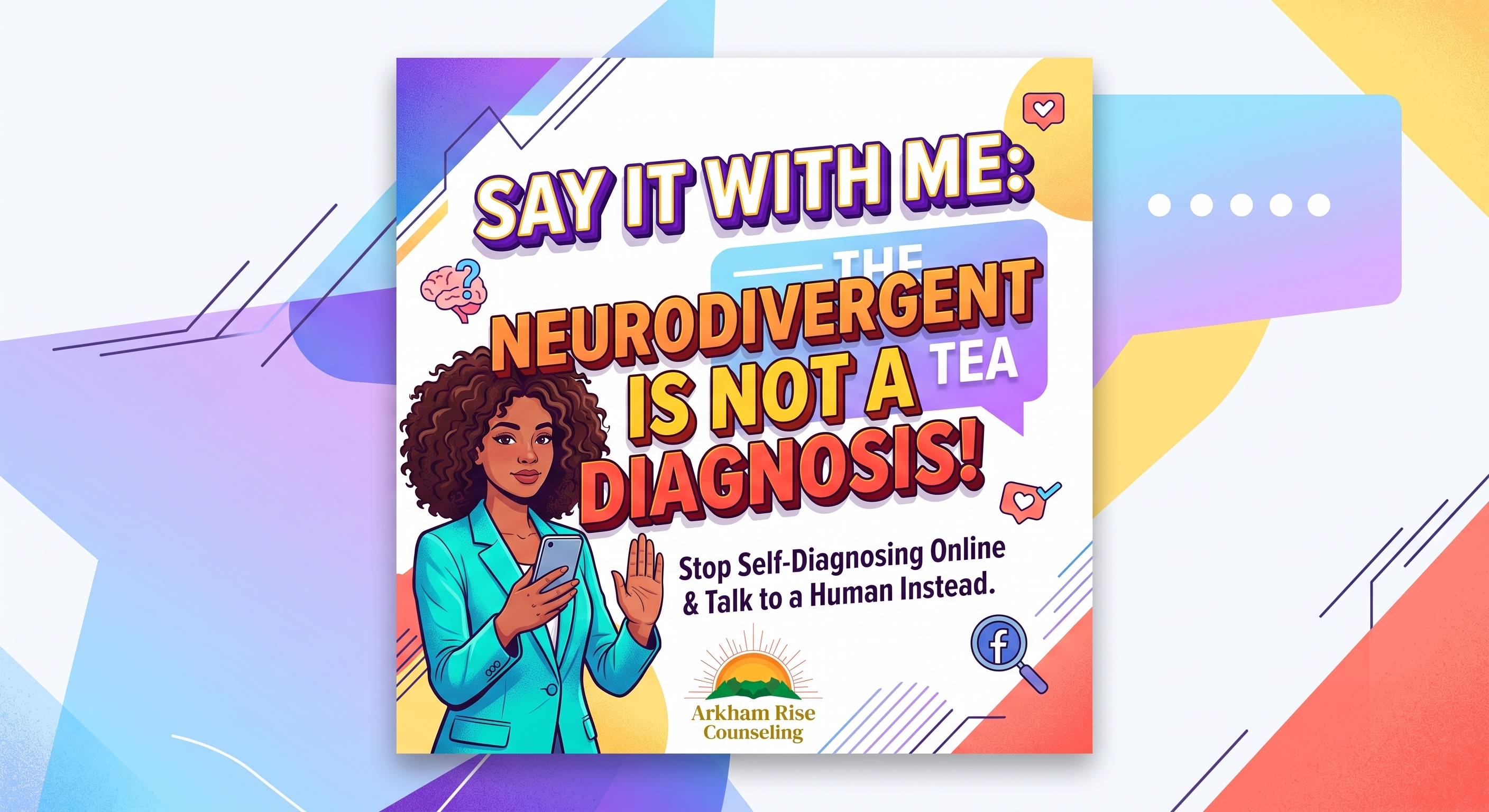
Let's get real for a minute: opening up in therapy or even just spilling to a friend can feel unnerving.
Whether you are Gen Z trying not to look like a complete chud by showing vulnerable emotions, or a Boomer who grew up believing that "feelings are for quiet rooms with closed doors," the instinct to bottle things up is surprisingly universal. Recognizing that you need help is basic mental hygiene—not a flaw. But lately, a new trend is derailing genuine healing: replacing actual therapy with internet-driven self-diagnosis.
The DSM-5 Doesn't Know What "Neurodivergent" Is
Scrolling through short-form videos and taking 15-second quizzes has led millions to slap labels on themselves. "Neurodivergent" has become the internet's favorite catch-all, but let's clear up the clinical reality: "Neurodivergent" is not a diagnosis in the DSM-5.
- Social Term vs. Clinical Diagnosis: The DSM-5 (Diagnostic and Statistical Manual of Mental Disorders) classifies specific conditions like Autism Spectrum Disorder (ASD) or ADHD. "Neurodivergent" is a helpful social identity, but it is not a recognized medical term or a formal diagnosis.
- TikTok Isn't a Diagnostic Tool: Social media algorithms are designed to maximize engagement, not clinical precision. They take universal human experiences—like an overstimulated afternoon or a short attention span—and falsely brand them as psychiatric disorders.
- The Danger of Self-Diagnosing: When you label yourself based on unreliable online content, you risk applying the wrong solutions. Treating burnout or trauma as if it were ADHD means the actual root of your suffering goes untreated.
The Brain on Silence vs. Real Expression
Hiding behind an internet label is often just a trendy way to avoid looking at what's really going on inside. When you bypass authentic dialogue and suppress your actual feelings:
- Cognitive Load Spikes: Your brain wastes immense energy inhibiting true emotional expression instead of resolving stress.
- Somatic Suppression: Unspoken tension converts into physical symptoms like muscle tightness, high cortisol, and sleep issues.
- The "Spilling the Tea" Effect: In psychotherapy, discussing raw feelings with a trained professional is called affect labeling. When you finally "spill the tea" on what's genuinely bothering you, neuroimaging reveals immediate calming in your brain's fear center (the amygdala).
Breaking Generational Defenses
Therapy isn't about slapping an algorithm-approved sticker on your profile or sitting in a room being judged. It is about creating a safe, low-stakes space to unpack what is real—free from internet noise.
When you're ready to stop self-diagnosing and start actually healing, the doors at Arkham Rise Counseling are open.